Monday, 29 October 2012

More free propagation books

The late Bob Brown NM7M was an expert on ionospheric propagation. He wrote a number of great books and two of these are now available as free downloads on Carl K9LA's site.

The first is the The Little Pistol's Guide to HF Propagation

The second, on Top Band (160m propagation), is NM7M The Big Gun's Guide to Low-Band Propagation

Carl has a lot more useful information as well - see just go to http://k9la.us/

Steve G0KYA

Friday, 12 October 2012

RSGB Convention, October 2012

I will be giving two presentations at this year's RSGB Convention - one on using HF propagation prediction programs and the other on modelling antennas using MMANA-GAL.

I have made the presentations available as PDF downloads should anyone want them. I'm not sure they will make a lot of sense without the accompanying talk, but you are welcome to them anyway.

Don't forget there is a free book that you can download that explains a lot about HF and LF propagation - see the link on the right.

Here are the links: 


Monday, 6 August 2012

Special Olympic call – GO0KYA

To celebrate Great Britain hosting the Olympic Games we are allowed to apply for a special notice of variation to our licence. This allows us to add the suffix “O” to our calls.

So until early September I can use GO0KYA. I tried it out the other day and within half an hour on 40m CW I had worked the Netherlands, France, Czech Republic, Germany and Belgium.

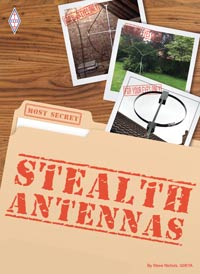
But today I had a great idea. To celebrate nearly two years, and sales of more than 2,000 copies, of my book “Stealth Antennas” I'm going to switch to my indoor parallel-fed dipoles or MFJ-1786 magnetic loop, turn the power down to 5W and work QRP with the call.

I'll try and operate around +/3 KHz of the CW QRP calling frequencies on 40, 20, 17, 20, 15 and 10m.

I plan to try and do this at least once or twice a week and I'll add the times/bands of operation to the top of this story each time.

This idea was inspired by John N8ZYA in Charleston West Virginia, who is featured in the book and works stations using Isotron antennas mounted indoors. And yes, he does work lots of DX!

Be good to work you.

Steve G0KYA 

Update 6/8/12
Well, great evening. Condx not too good and lots of noise/QSB but worked: RY7G, OH2NOS (10W his end), OM3CAZ, OM8RA, R6AF, HA5AEK, IT9BUA (QRP), EA8AGF (QRP), S51WO (17m) and the highlight - Taka JA0FVU (17m), otherwise all on 20m QRP 5W from an Icom 756 PRO 3. Using a new touch keyer so a few mistakes! Mostly used the outdoor 20m M0CVO Windom (OCF). One or two were with indoor dipole, but needed a little more oomph. Will be on the air again soon.

Update 16/8/12
Had another session with the Olympic call today and worked R10RLHA/1 (Russian Lighthouse), RN3DMU, UA4NE/P, R200V,HG20SD, CT3AS, 5N7M (Nigeria), EW8O and OM3KFF. A couple were on 5W, but the majority on 50W. I have put the Western HF10 dipole back up in place of the M0CVO Windom as I had to repair the 10m fishing pole support - works well on 20m. Not so sure about 15m though! Very pleased about Japan and Nigeria.
 

Thursday, 2 August 2012

UK propagation charts for August 2012

It may be summer, and the Olympics are in full swing, but we can’t really expect to see record-breaking propagation on the HF bands in the Northern hemisphere.

This often puzzles new (and not so new) hams. After all, HF propagation relies on sunlight and we have that in abundance in the summer.

Unfortunately, life is not that simple. While increased UV in the summer is guaranteed, as the angle the sun makes with the ionosphere in the northern hemisphere is increased, you actually get less overall ionisation of the all-important F2 layer.

This is due to a chemical change in the composition of the F2 layer in the summer compared with the winter.

There is an increase in the molecular-to-atomic composition of this layer in the summer, which makes it harder to ionise. As a result the F2 critical frequencies in June can be half what it they are in January.

This effect is called the Winter Anomaly.

At the same time D-layer absorption is very high in the summer, especially around local noon, which gives us a double whammy – lots of absorption and low F2 critical frequencies.

The net effect is that the bands much above 18MHz can remain stubbornly closed, apart from Sporadic E (Es) openings, which by August are less prevalent. And the lower bands are also less useful during the day due to absorption.

For this reason stay away from 80m (3.5MHz) in the daytime – 40m will be better around the UK as long as the critical frequency stays up near 7MHz. Twenty metres (14MHz) will probably remain the most reliable DX band both during the day and night, although don’t write off 18MHz (17m).

Better HF conditions will start to reappear in September – sunspots, solar flares and coronal mass ejections (CMEs) willing.

Don’t forget there is a free book about HF propagation available to download on the right.


Go to the August propagation charts from the UK

Thursday, 5 July 2012

UK propagation charts for July 2012

There is an old Chinese curse that says "May you live in interesting times". I thought it was a greeting, but apparently not!

Well, we are living in interesting times as far as HF propagation goes.

July is usually in the middle of the HF summer doldrums - not really good conditions to speak off, but with some Sporadic E (Es). But this month is being characterised by a mass of solar flares, coronal mass ejections (CMEs) and high solar flux index (SFI) levels.

So while high SFI numbers usually indicate good conditions on the upper bands, the flare actvity is causing havoc with the bands shut down and lots of noise. Couple this with summer thunderstorms (Medium Wave was just a wall of crashes and bangs on Thursday 28th June) and it is hard to know what to work.

But in amongst all this there are good openings to be had. On 4th July I worked K2K in New Hampshire on 15m CW. This was a station being run for the US Independence Day and the prop charts would suggest that no path would have been open on that band and at that time ((1415hrs GMT).

Others are chasing 1A0C - The Order of Malta’s Italian Relief Corps (CISOM)- which is in Rome, not Malta by the way. Its signals have ranged from barely audible to S9+ depending on the solar flares and CMEs.

The best advice is keep on eye on the solar data at www.solarcycle24.com, and don't write the bands off too soon. And if you don't know what SFI, A and K indices are, take a look at the free HF Propagation book listed on the right.

73 and gud DX! Steve G0KYA

Go to the July propagation charts from the UK

or select another month


Monday, 18 June 2012

So you want a budget shortwave receiver?

Had a phone call today from a guy who was 72 and wanted to get back into shortwave listening. He said that he used to own a Marconi CR100 receiver and had things changed much?

Woo! Not much!

Anyway, after a chat he said he wanted to buy a short wave receiver, but didn't have a clue where to start and didn't have too much money. So, what to recommend?

My first reaction was to suggest a used Yaesu FRG-7700 or FR-100, or perhaps an Icom IC-R75, but these were out of his budget and he preferred new anyway.

And then it dawned on me. What about a Degen DE1103 or a Tecsun PL-600?

For those who aren't familiar with these they are both Chinese-built portable radios that cover from Long Wave to 30MHz and cost less than about £60.

Now, I know what you thinking, the best bet would be to go for a dedicated communications receiver, but for £60 brand new – I don't think so.

I own a Degen DE1103 and it is actually not bad at all. I have often listened in to various amateur QSOs with it, including CW and considering its size and weight it does quite well. It will also pull in BBC Radio Wales on 882KHz medium wave, broadcasting from Washford, Somerset, during the day at a distance of 212 miles from here in Norfolk.

It can also pick up VOLMET transmissions on SSB and lots of short wave stations, just using the whip. You can attach a longer wire antenna – it has a socket on the side, which I would recommend as it is less prone to overload. According to some reports the whip goes through a FET amplifier so overloads if you connect a wire to it..

Even using the socket, you may need to switch it from DX to Local thought to avoid overload.

It comes with a velvet carrier bag and rechargeable batteries for about £60 delivered (search Ebay). There are plenty of reviews of the Degen, especially on Eham.

I also have a Tecsun PL-600 on order which has a similar spec so I'll post a review of that when it comes.

So yes, things have moved on a bit since the CR-100, but in some respects the hobby is cheaper now than it ever was. And things are more portable too!

Thursday, 3 May 2012

UK propagation charts for May 2012

Solar conditions continue to look dismal, although the solar flux did get up to 149 on 21st April. This coincided with our entry for GB0CMS on International Marconi Day. And yes, you could see the bands hopping with contacts into Barbados and central Australia.

But now the SFI is down to 100-120 again.

Cheer up though - May marks the start of the Sporadic E season in the Northern Hemisphere so 28MHz and 50MHz will be humming at times.

This rather suggests that F layer propagation on 28MHz is non-existent. Not so - the 706T DXpedition to Yemen has been romping in to the UK on 10m CW for large portions of the day. Not terribly loud, but definitely workable once the pileups dry up a bit.

73 and gud DX!

Go to the May propagation charts from the UK

or select another month