Showing posts with label amateur radio. Show all posts

Tuesday, 3 February 2026

Updated HF Propagation Charts from the UK

I have just updated my short-path propagation charts from the UK with the latest predicted smoothed sunspot numbers.

It takes about half a day to do - it took longer this time as I was using a new, faster laptop, but couldn't remember the log-in details for my server!

Anyway. they are done now. They are updated up to January 2027. Interestingly, the predicted smoothed sunspot numbers range from 120 for February 2026 to 96 for January 2027. These come from the Space Weather Prediction Centre in the US and are SIDC figures.

So it looks like we will have another good year of HF propagation, before the numbers star to slide further in late 2027. 

I still recommend both Proppy and VOACAP.com if you want detailed HF forecasts, or if you want to do long-path predictions. But for casual use my charts are fine, and produced using VOACAP.

Wednesday, 21 February 2024

New worldwide 10m beacon list issued

RSGB’s Propagation Studies Committee (PSC) has released a new HF beacon list, with the 10m listings completely revamped.

The old list, which was started by Martin Harrison G3USF (SK), had been added to over the years, but was getting out of date. The only way to make it more accurate was to start again.

Use was made of the Reverse Beacon Network (RBN), which wasn’t available when the list was originally created, plus listeners’ contributions from around the world. 

I started by removing around 60 beacons that had not been heard for some time. Delving deeper it seems that a lot had been taken off the air, the owners had died, or their frequencies had changed.

Using the RBN gave a pretty good indication of what beacons are actually on air, plus help from a list compiled by Gary ZL2IFB filled in some of the gaps.

Beacons that are temporarily off-air have been left in, but marked in black.

While no list will ever be complete as changes take place around the world, I think the list is now far more useable. I’ll endeavour to make changes as and when they are needed.

The new beacon list can be found at:

https://rsgb.org/main/technical/propagation/propagation-beacons/

Thursday, 30 March 2023

Ten metres (28MHz) beacon list updated

I've just spent two days updating the RSGB's 28MHz beacon list. I used the reverse beacon network and logged/updated the beacon list accordingly. This takes a lot of time as many of the "spots" are misread and have to be checked individually.

Beacons heard over the last three years are highlighted in red. I'm now happy that it is pretty up-to-date. The RBN has a beacon listing, but it is way out of date - GB3RAL is still listed and that hasn't been on for years.

I think this is the best way as it reflects beacons that are actually transmitting and not just listed. The full beacon list can be found on the propagation section of the RSGB website here: https://rsgb.org/main/files/2024/10/RSGBs-Worldwide-List-of-HF-Beacons.pdf

Change of freq/details:

28270.5 PY4MAB  Pocos de CaldasGG68      2W    

28193.1 LU2DT   Mar del Plata  GF12      5W 

28208   WD5GLO  Minco OK       EM15ah    3W 

28281   AG8Y    Middletown OH  EM79TL  7.5W   

28273.8 WI4L    Dalton GA      EM74MS                    

28243   AA1SU   VT             FN34KL    5W   

28209.5 N2UHC   St Paul KS     EM27JM    4W

28203.3 WB9OTX                 EN55      5W             

28280.4 KE4IFI  Lexington SC   EM9JV     7W 

Additions:

28297.9 K4JDR   Raleigh, NC    FM05     10W 

28255.8 WB4NCT  Athens, AL     EM64      5W  

28241.3 WW2BSA  Warren, NJ     FN20OU    7W   

28260.8 IQ8BB   Salerno        JN70JQ      

28178   IQ0GV   Sora           JN61TR    5W    

28236.3 F1ZTS   Rochefort      in97QI   10W     

28266.1 VK4RST  St George QLD  QG41HW   10W

28285.9 AJ4YN   Chesapeake, VA FM16UO    ? ?   

28215   GB3MCB  Cornwall, UK   IO70OJ    ? 

28252.6 WD8INF  Lebanon OH     EM79VK   10W

28258.8 AC5JM   Bartlesville OKEM16FT    ?

28209   N5TIT   Westminster, COEM12PX   10W 

28206.5 N4SO    Grand Bay, AL  EM50tk    6W   

28296.2 VE3IIM  Hanover, ON    EN94LD    4W 

28321.4 IZ1KXQ  La Spezia      JN44WC  0.1W

28230.8 NG7I    Ritzville WA   DN07TC    5W  

28202   WB7EUX  Joseph, OR     DN15JI   10W 

28233.5 K7RA    Seattle, WA    CN87UQ   11W  

28260   KC4QLP  Little Falls NYFN23OB   10W  

28245.3 K0WKT   Black Dia. WA  EN36WT    5W 

28226   K6KWS   Redwood City CA CM87VL  10W 

28240.1 W8EDU   Cleveland, OH  EN91EM   10W

28206.9 N4XRO   Burbank CA     DM04UE    5W 

28276   XE1JAL  Xalapa         EK19MM    5W

28230.3 W2MQO   Grand Island FLEL98dv   10W

73 de Steve G0KYA
Chairman, RSGB Propagation Studies Committee

Sunday, 10 March 2019

2019 Commonwealth Contest and QRP

My Yaesu FT-817 and Winkey

This weekend has seen the Commonwealth Contest 2019. I documented my 2018 attempt on the blog, and was keen to give another go this year.

Last year I used my Icom IC-756 Pro 3 wound back to 5W, but this year decided to use my Yaesu FT-817 for a real QRP approach. I bought a USB lead for it this year to give full computer control with N1MM and decided to use my Winkey for full auto CW .

This year I had a slight change to my antennas. Out went the end fed half wave (with 80 loading coil) and in came a 66ft OCFD with the apex at about 8m. Also new was a quarter wave vertical for 20m, erected for the weekend on a 10m fishing pole - more of that later.

The contest ran from 10am, but at 9.30am I was struggling with the computer and interface. Stupid me forgot to turn off the keyer on the FT817 - duh!. Soon we were under way.

The contest got off to slow start with my 5W struggling to break through. Many stations just couldn’t hear me. The quarter wave vertical for 20m turned out to be a noise magnet - almost S8. I  decided to abandon it quite quickly.

After an hour I had a few stations in the log - 5B4AGN (Cyprus) and 9H1CG am (Malta), but nothing better. 3B8XF Mauritius (G3TXF) was audible, but I couldn’t break through. Same with ZF2CA Cayman Islands (both 3B8 and ZF were worked last year).

The afternoon saw Canada romping in and I ended up doing an hour at about 10-11pm, clearing up the UK HQ stations.

Sunday started at about 5.30am and a few more Canadians on 40m were cleared up. I then had a big breakthrough - VK4CT on 40m. It wasn’t easy, as they needed three or four repeats on their serial number, but we got there eventually.

So there you go - 34 QSOs in total, which doesn’t sound much, but I didn’t take part for the full 24 hours and it is HARD work with only 5W. Peter M0RYB, a fellow Norfolk Amateur Radio Club member, cleaned up with 70 QSOs in the QRP section. Must find out his secret!

Note: The FT-817 isn't much of a contesting radio. I found it struggled with a nearby 400W station and also found the 500Hz filter a bit too wide. Might be back to the IC-756 Pro next year.

Monday, 4 February 2019

HF propagation charts updated

I have just updated my HF short-path propagation prediction charts for the UK (accessed via a link on the right).

I had to update them with the latest smoothed sunspot numbers for the next 12 months.

This is a little depressing as after May 2019 the predicted SSN falls to "one" and stays like that for the rest of the year! Sunspot minimum is currently thought to be later this year, but could spill over into 2020.

These charts are meant as a rough guide. Other tools that are available are:

1. The VOACAP RadCom prediction tool - this replicates the locations found in the monthly RSGB publication, but lets you choose your own mode, power and antennas to give more accuracy.

2. The Predtest.uk tool - this tool, developed by Gwyn Williams G4FKH, uses the latest ITURHFPROP prediction engine to let you produce point-to-point or area propagation predictions, again with full control over the input parameters.

3. Propquest - this is a near real-time tool, developed by Jim G3YLA, that shows the critical frequency and extrapolated maximum usable frequencies available over different path lengths. The critical frequency (the frequency at which a radio wave launched vertically stills gets returned to Earth) is derived from ionosonde data, mainly from Chilton and Fairford.

It should be your first port of call to see what conditions are like. In the summer it also has predictions for Sporadic E, courtesy of Jim.

Steve G0KYA
RSGB PSC Chairman


Monday, 21 January 2019

Yaesu FT-991A firmware update warning

I have owned a Yaesu FT-991A for about two years. I have to say that I really only use it on two metres. It isn't a bad radio, but it can be fiddly and you have to get used to going through lots of menus to do what you want it to do.

As such I tend to use my Icom IC-756 Pro 3 as my main HF rig (unless I'm using one of my QRP rigs like the Elecraft K1, YouKits HB1A, QCX, MTR etc). Use the QRP tag on the right if you are interested in reading about them.

Anyway, I recently tried to use Yaesu's Fusion mode as we have a new Fusion repeater (GB7NM) about 10 miles from me.

I wasn't impressed with the audio though. Half the time it was unintelligible and pretty awful to be honest. I did wonder if the signal strength is sufficient, but it is S9 +30db. Also, I live about half a mile from the police headquarters and do suffer some desensing on 2m if I use a cheap handheld like a Baofeng connected to my 2m antenna. Perhaps that's the problem.

However, I checked and found that the FT-991A's firmware (including C4FM) was out of date and thought that an update might improve things.

So, following the instructions, I first uploaded the main firmware - and this is where I came unstuck. Once I had completed it I rebooted the radio, but it wouldn't - all I had was the Yaesu screen.

Arrrgghh! Now what. Reading around the internet I found that you have to upload all four of the Yaesu firmware updates - the main, the TFT screen, the DSP and C4FM.

If you don't the radio won't work.

To be fair it does say in the instructions:

IMPORTANT NOTICE:
MAIN Ver. 02-01 also requires TFT Ver. 02-00; also DSP Ver. 01-11 and C4FM DSP Ver. 04-15.
If your FT-991A does not have them already, please update all firmware, they must be used together.

Once I had uploaded all four and reset it all was fine again - apart from I had lost all my settings.

Another quick hint. If you have memories loaded use VK2BYI's FTRestore software before you start the firmware update and make a copy of the memories. Once you have made the firmware updates you can then reload the memories and save yourself a lot of time.

Anyway, after two hours of messing around I had the radio back the way I wanted it.

So is Fusion better now? I still don't think the audio quality is that good, although it my be a bit better. But at least the radio isn't bricked!

Thursday, 1 November 2018

Autumnal HF conditions show sunspots aren't everything

Click to enlarge

Don't you just love it when something works! I took down my multi-band end fed half wave (EFHW) antenna last weekend and replaced it with a home-made 40m off-centre fed dipole (OCFD).

The EFHW worked, but I was never happy with the performance. This may be due to the inverted L configuration or the compromise 49:1 ferrite-based Un-Un. Either way, I felt I was missing out on some DX and was keen to try something else for the Autumn/Winter.

The 40m Windom is about 66ft long and has a home-made 4:1 Guanella balun made with two ferrite cores. It is fed at the 41%/59% point so it covers 40, 20, 15 and 10m with an SWR below 3:1 and the other HF bands with an ATU.

The apex is at about 8m with the ends down to about two metres, so not ideal.

Nevertheless, in back-to-back WSPR tests it proved to be better than my W5GI dipole that goes over the roof by about 7dB on average. This was good as the EFHW was mostly down on the W5GI.

Anyway, I thought I would leave it running on 20m WSPR for 24 hours to see what it could pick up. This was with zero sunspots, but a Kp index of 1. I was delighted to see that I had been picked up as far afield as Japan, Australia, Alaska, Antarctica and Brazil. The furthest west I got in the US was Utah.

So, I'm a happier bunny. I might return to the multiband EFHW one day, perhaps looking at different ferrite mix configurations for the Un-Un, but for now I'll stick with monoband EFHWs with tuned iron toroid/capacitor matching units that work well.

The OCFD can stay up for a while - you know that the best antenna you can have is either the one you just took down, or the one you are going to put up, not the one you are using!

Tuesday, 19 June 2018

Fixing the 20m QCX radio


I've had my 20m QCX kit working now since just after Christmas. While the build was quite straightforward I did have a few problems.

Click to enlarge the photograph by the way.

The first was that I managed to blow the 7805 regulator while leaving the radio running on WSPR one morning. Having replaced that I found that the rig was quieter and there was no TX output any more. Thinking I had also blown the PA transistors I replaced all three of the BS170s, but that didn't help either.

Anyway, after a lot of help on the QCX reflector I decided that the fault had also taken out the 74ACT00N chip. This had been soldered onto the board directly so had to be cut out with a Dremel and a new IC socket installed.

And after finding a short somewhere near the PA transistors all was well - success! Output using a 12.6V Lithium battery pack was about 1.8W

I have been using it on and off ever since as it has a really nice receiver - even took it to North Norfolk as I detailed in another post.

But one thing always bugged me - why only 1.8W? When I built it originally I was getting more like 3W, so perhaps it was the replacement BS170 transistors, which came off Ebay on a slow boat from China.

So having a few hours free today I ignored my own "if it ain't broke don't fix it" mantra and pulled it apart. I replaced all three BS170s with new ones bought from the GQRP club and while I was at it I replaced C22 with a 0.1uF capacitor to try and soften the sidetone a little.

I managed to break one of the wires to one of the control buttons on the front in the process, but it is now all back together.

And the power output is now just under 3W with 12.6V - success! I have no doubt I could get more if I messed around with the band pass filter, but I don't think it is worth it. I tend not to run it on 13.8V as the regulator gets VERY hot indeed.

Anyway, it is a great little radio and will be going on some more journeys no doubt.

I can thoroughly recommend it as a kit project - see QRPLabs site. My case came from Banggood in China and only cost  a few pounds. It did take about 10 hours to machine (posh word for drilling out with a Black and Decker and attacking it with a file).

The label was produced in Photoshop and printed off by Photobox.co.uk. I ruined the first one by spraying it with varnish, which made the dye run. Luckily I have a few more spares and may eventually cover one in sticky-back plastic. But for now it looks great.

The red buttons were bought just before Maplin went bust so are a lasting tribute to what was one of my favourite shops and the result of much ribbing by the family every time I went there - RIP Maplin.

Thursday, 24 May 2018

"Bumps on the Air" 2018 - QRP in North Norfolk, UK


Today was 2018 ”Bumps on the Air” day for me. Because we don’t have any summits in Norfolk I have to make do with tiny hills, or bumps!

Two years ago Jim G3YLA and I climbed up Beeston Bump (63m) and did some amateur radio operating. This year I wanted to beat that so drove to Norfolk’s mightiest peak – Beacon Hill near West Runton at 103m. Ta dah!

Actually, this wasn’t a very exciting spot as there are just two rotting benches, a flag pole and trees all around.

Nevertheless, I set up my end fed half wave vertical on a 10m fishing pole and connected up my Yaesu FT817. There wasn’t too much about but I worked John F5VKU (also G8MM) near Cannes with 5W SSB. He said he was struggling to hear me.

My 20m QCX radio - click to enlarge any image.
After playing with SSB for a bit and failing to break some pile ups I connected up my 20m QCX radio and tried some CW. I was really surprised as Karl IV3RJH came back to me, 559/549 both ways. I was running about 2W, he was running 3W.

I do have to fix the sidetone on the QCX as calling CQ sounds more like “thump-de-thump-thump-thump-thump-de-thump”. I have the new capacitors, but am waiting for some new BS170 transistors so I can hopefully up the power level to more like 4W too.

But the QCX is an amazing radio for the money and hey, I built it myself, complete with the case and custom label, so any QSO makes me smile.

Another 20m SSB session with the FT817 and I bagged Jack OH3GZ and Juha OH6QAZ.

At this point I packed away and after lunch headed for Beeston Bump on the coast near Sheringham. I’ve written about this before as it has a fantastic view over the North Sea.

Anyway, I put up the EFHW vertical for 20m and set to with 5W CW from my Elecraft K1. This raised Gert OH/DL7UG and Dima RW4C. I then bagged Fabi IK5IiS near Florence.

Also heard were stations in Cypus and Canada, but the Cyprus station on SSB couldn’t hear me and the Canadian seemed to be sending his life story in CW to another station and I got fed up waiting to call him!

I also had a play with my 3W MTR3, but didn’t work anyone as I could see rain clouds coming and decided to pack up.

So not a bad day’s radio. The Elecraft K1 and Yaesu FT-817 worked flawlessly. I think I was getting some RF into the keyer on the QCX as I had trouble sending “/P” – the “/” turned into a right mess sometimes, although I had no trouble sending it on the K1 with the same Palm Paddle.

The moral is that life is NOT too short for QRP!

Update: I checked the reverse beacon network last might and saw that I had been picked up across Europe while calling CQ, but often with no response. Some of these SNR figures are quite large too. In other words I was loud enough.

That's a shame as it would have been nice to have worked some more stations.

Is this because of a lack of activity? Or is it because, as I often wonder, that a lot of people have moved to FT8?

Tuesday, 21 November 2017

Christmas present ideas!

As Christmas is coming, I thought I would remind people that there are some great radio-related goodies for sale at CafePress.co.uk and .com.

You can choose from a number of items, including:

  • Three different types of ship's radio room clock, with silent period sectors marked
  • "Remember QRT SP" Merchant Navy Radio Officer merchandise
  • "Keep Calm and Work Some DX" merchandise
  • "Keep Calm and Work Some CW" items
  • Nikola Tesla merchandise, featuring him sitting in his Colorado Springs laboratory in 1899, surrounded by electrical arcs.

You can have the last three slogans added to T-shirts, sweatshirts, mouse mats, calendar, mugs and much more.

Just go to the Radio Room!

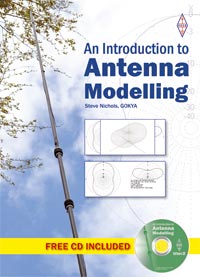
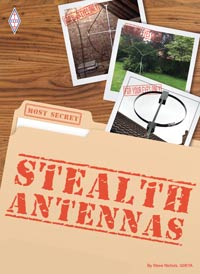
Or there are a number of my radio-related books that make good presents , including "Radio Propagation Explained", "Antenna Modelling", "Stealth Antennas" and "Getting Started in Amateur Radio". Use the image links on the right for more information.

Wednesday, 24 May 2017

Soda Pop 40m CW QRP radio now finished

The finished 40m Soda Pop QRP radio (click to enlarge)

I finally finished the 40m 5W Soda Pop CW radio by Steve Weber KD1JV.

Building the board took about 8.5hours. But preparing the hardware from scratch took a lot longer.

I used a Hammond die cast box and drilled the hole for the controls. I then chain drilled, cut and filed the aperture for the display. My metalwork skills are limited to what I can do in the garage with a Bosch drill and a selection of files.

I ended up having to elongate the holes for the controls and turn the hole for the antenna connection into a slot, otherwise I couldn't get the board in at the angle required. As a result I had to make up a plastic blanking plate for the back.

The box was painted with Plasticote metallic blue and gloss varnish.

The finished 40m Soda Pop QRP radio (click to enlarge)
The panel label was produced using Photoshop and a photograph of mine of Happisburgh Lighthouse in Norfolk (we don't have any summits as it is very flat!).

Once I was happy I then used Photobox to produce five copies of the photograph (in case I screwed a few up) and lacquered that too.

The whole thing was assembled after the front panel was stuck on with red Spraymount.

I'm happy with the result, although I might do the front panel again at some stage to get the hole alignment a little better and also lacquer it with a matt rather than gloss varnish.

Things I learned:
1. Metal cases take a lot of work to get them right!
2. Measure, measure and measure before cutting and filing.
3. When chain drilling, make the aperture too small at first and open it up with a file.
4. Choose a dust free spot to do the painting - a dusty garage floor is not ideal
5. Let the paint harden for about a week to avoid fingerprints.

Now, the fun can start and I can use it a bit more.

So far I have worked Italy, Ukraine, Poland, Germany, and Estonia with it. Many thanks to Steve Weber KD1JV for a great little design.

I'm planning a Norfolk "Bumps on the Air" (BOTA) outing with it quite soon.

Steve G0KYA


Thursday, 6 April 2017

International Marconi Day, April 22 2017


Saturday 22nd April 2017 is International Marconi Day when stations around the world celebrate the birthday of Guglielmo Marconi.

It is also a good opportunity for you to gain a very nice certificate. All you have to do is work 15 award stations and send in a log extract - you don't need QSL cards.

I shall be helping to run GB0CMS again this year at Caister Lifeboat in Norfolk, UK.

There is short video that looks at the equipment the club used to make 165 contacts in 24 countries on Saturday 30 April 2011. And another for the 2012 event when we made more than 500 contacts.

See http://www.youtube.com/watch?v=Z41FLKaT7eY and
http://www.youtube.com/watch?v=C8ZRW0q6SyI

To help UK stations work the requisite number of IMD stations I have prepared some HF propagation predictions. You can view these online.

You can find out more about IMD at: http://gx4crc.com/gb4imd/

Wednesday, 29 March 2017

You never know who you might hear on HF!

Colonel Doug Wheelock, KF5BOC
I was tuning around HF today and heard an American accent on 14.275MHz. This was odd as conditions had been really bad because of a geomagnetic storm, complete with a K index of six.

I didn't think there would be much propagation to the US.

Listening carefully it turned out to be Keith RA/WD9GET in Star City, Russia. Keith is a flight surgeon with NASA and was operating the amateur radio station at the cosmonaut/astronaut training centre in Russia.

Before I had a chance to call him he said he was taking a break. That was a shame, but I left the rig running on 14.275.

Ten minutes later RA/KF5BOC came up on the frequency and was calling, so I replied. He was a good 59 on my 40-10m EFHW antenna at about 25feet.

It turned out to be Colonel Doug Wheelock KF5BOC, the International Space Station commander, who is in Russia at the Gagarin Space Centre to help with training. Blow me down!

So Doug and I were able to have a quick chat and I mentioned how I had been involved in the ISS schools contact with UK ESA astronaut Tim Peake. When we finished the pile-up started - big time!

Just shows you never know what you going to come across on HF.

Monday, 9 January 2017

HF and solar conditions continue to decline

I've now updated my hourly HF propagation charts for the UK for the next three months.

The charts, with real time solar information, can be found at http://www.infotechcomms.co.uk/propcharts/
You can definitely see the effects of the current poor solar conditions. As the charts are produced by VOACAP it is suggested we use the smoothed sunspot number (SSN) for the calculations.

In January 2016 the SSN was 44.8, but this month it is just 29.2. In fact, the actual daily sunspot number is even lower than this at around zero to 11 with a solar flux index in the low 70s.

Given that at sunspot minimum we wouldn't expect the solar flux index to drop below 66 you can see that we are very close to the kind of conditions we can expect over the next few years.

NASA says the current sunspot cycle is the smallest since cycle 14, which had a maximum smoothed sunspot number of 107.2 in February of 1906.

The current prediction for sunspot cycle 24 (this one) gives a smoothed sunspot number maximum of about 101 in late 2013.

The next sunspot minimum is currently predicted to occur around 2019-2020.

The solar maximum for cycle 25 is predicted to be around 2025, possibly with a monthly smoothed maximum sunspot number of around 60-65. If true, this is almost down to Dalton Minimum levels.

What we are seeing is that the ionosphere is currently struggling to regularly open up to DX at frequencies much higher than about 18MHz. Around the UK we are even finding 40m (7MHz) closing to inter-G contacts by early afternoon, if it opens at all.

This means that 80m (3.5MHz) and 60m (5MHz) are coming into their own, although both are struggling with inter-G contacts by late afternoon.

A succession of coronal holes and their associated high-speed solar wind streams are also causing disruption to the ionosphere. While these are typical of this point in the sunspot cycle they are generally not helping DX at all.

This week's high K indices have been caused by such a hole, although the solar wind has mostly had a north-facing Bz field, which is less likely to couple with the Earth's magnetic field, and we have't seen the very high K indices that indicate severe auroral conditions.

Lastly, readers might be interested in a new HF propagation tool based on the ITU's ITURHFPROP software and developed by Gwyn G4FKH. The URL is http://www.predtest.uk

The 'Area Coverage' predictions have been available for some time, but a new Point-to-Point prediction tool is now available. Clicking on the link starts the process, when the form is filled out a series of plots are available depicting propagation between the required Tx. and Rx. sites.

New features include various colour schemes for the plots allowing users with colour preferences to make the best viewing choice for themselves.

Steve G0KYA

Monday, 2 January 2017

Some Christmas QRP HF operating

Elecraft K1 on 40m QRP frequency.
The period from Christmas to the New Year is traditionally the time for the GQRP “ Winter Sports”.

I don't take this too seriously as there are plenty of other calls on my time, but it is an opportunity to get on the air and work a few stations with 5W CW or 10W SSB.

This year got off to a good start with a contact on 23rd December with SK6SAQ at Grimeton in Sweden – home to the Alexanderson alternator that puts out a 200kW signal on 17.2kHz.

SAQ also has a special event callsign so it was good to get operator Kjell in the log using 5W from a Yaesu FT-991 into an outside EFHW. I really must visit Grimeton one day.

I also dragged out my Bencher paddle as I was sending some awful Morse with my Kent single lever I think I was getting key bounce so will have to take a closer look. The Bencher was fine, which was good news.

After Christmas I turned to my Elecraft K1, which I finished in the summer after owning the kit for about 12 years!

This brought CW QSOs with Peter OM0WR in the Slovak Republic on 7.029MHz with 5W into my loft-mounted zig-zag dipole.

The YT160TESLA QSL card.
Then it was YT160TESLA on 20m celebrating 160 years since the birth of Nikola Tesla in Serbia. I really want their QSL card which looks great and worked them on 40m in March. As they went QRT at the end of 2016 it really was a last chance.

I have an Icom IC-7300 on test, which belongs to my local club and that brought 9A1700SBD in Dubrovnik, Croatia, although it took 25W to get through.
The view across the rooftops of Dubrovnic, Croatia.

2016 was the 1700th anniversary of St. Blaise, patron saint of Dubrovnik – if you ever get the chance to go there, do as it is absolutely beautiful.

Station LZ463PP then went in the log with 10W from the IC-7300 and a W5GI dipole on 17m SSB, so still QRP. It was celebrating 463 years of Saint Patapii.

Finally I had a nice (but weak) QSO with Ian EA7JUK in Lubrin, Spain on 20m CW using 5W from the K1 and an indoor dipole. Ian's UK call is G0WHX.

The Reverse Beacon Network proved everything was working!
Sunday 2nd January marks the QRPARCI New Year's Day Sprint, but I really didn't expect to hear anything from the US due to rotten HF conditions. If I do I'll update the blog!

So, I heard a lot more stations than I worked, but I had fun – which is what it is all about.

Wednesday, 14 December 2016

Working Santa's elves in Lapland, Christmas 2016

Every week I produce the HF propagation report for the RSGB's GB2RS news. This week I thought I would do something a little different. If you have children or grandchildren they might find it interesting. I worked them on 20m SSB on the 14th and they were LOUD! Here is the report:

----------------------------------------

This week we have a slightly different approach to the HF propagation news. We want to help you and your family contact Santa's elves in Lapland, Finland.

The station Oscar Foxtrot Nine X-ray (OF9X) is once again on the air this Christmas from Santa Claus land in the Arctic Circle.

Twelve elves are operating OF9X (that is, “Old-Father-Nine-Christmas”) from the city of Oulu in Finland for the entire month of December

To work the elves at OF9X, the best starting point is the DX cluster or reverse beacon network to see where they are operating. They have been spotted on many bands and modes over the past week.

The HF predictions suggest seventeen or twenty metres (18MHz or 14MHz) both give a good possibility of a contact with a probability of greater than 90% during the hours of daylight. Even 15m may be possible around midday.

Forty metres (7MHz) should also give a high probability for the whole 24 hours, while 80m and 160m may also be open during the hours of darkness in the UK.

But get in quick, NOAA is predicting unsettled geomagnetic conditions from December 19th to the 23rd due to a recurrent coronal hole.

Wednesday, 30 November 2016

Quarter wave verticals for HF

The radiation pattern for a quarter wave vertical.
I had an email from a radio amateur who was struggling to work DX after putting up a very off centre fed dipole cut for 40m and fed with open wire feeder.

This is probably not the best way to go about it as the off centre feed can cause an imbalance and create RFI problems.

I suggested a better DX antenna might be a quarter wave vertical cut for the band in question and fed against a decent ground plane. But what is a decent ground plane?

Rudy Severns N6LF has done extensive research on this, but his conclusion was that you really need as many radials on the ground as possible. Up to 120 is optimal, but you will notice an improvement as you add more and more with perhaps 16-32 being the minimum for good performance.

Don't be misled by your SWR meter as a single earth stake may give you a low SWR, but what you are seeing may be the effect of ground losses.

A quarter wave vertical should have a theoretical impedance of about 35-36 Ohms, so if you have a 1:1 match you are seeing 35 Ohms, plus 15 Ohms of ground losses.

As you add more and more radials the SWR may INCREASE. This shows it is starting to get closer to the optimum 35 Ohms.

The goal is to keep on adding ground radials until the SWR stops changing. Then the vertical is working about as good as it can.

Rudy found that once you get above 32 ground radials the improvements start to get more subtle and increasingly minimal.

But how long should the radials be be? A quarter wave radial laying on the ground is detuned so a true quarter wave is no longer a resonant radial, although it is a good overall compromise.

So the golden rule is that for a given amount of wire more shorter radials are better than fewer longer ones. This helps to collect the ground currents around the base of the antenna and improves the antenna's efficiency.

If it is a multiband vertical then the compromise is to make them as long as the antenna is high. If it is a monoband antenna then perhaps a quarter wave is best, although eight "eighth wave" radials might work better than four quarter waves (if on the ground).

In tests though you will find that two resonant elevated radials fitted so that they are at 180 degrees to each other may work as well as eight or so random radials on the ground. Rudy suggests that more resonant quarter wave elevated radials may be better still, but its starts to get a bit unwieldy.

A few years ago my club used a quarter wave vertical cut for 40m and fed against two elevated quarter wave radials and it worked very well. For contacts out to Germany from the UK there was little in it compared with a horizontal half-wave dipole at about 40 feet. Closer-in contacts were louder on the half wave horizontal dipole due to the different radiation pattern, but for DX the vertical was better.

You can see this with the MMANA-GAL antenna modelling software.

We also used it on 21MHz where it was a three quarter wave vertical and ended up working India (VU).

As you can buy 10m fibreglass fishing poles for about £30 you can make an effective quarter wave vertical for very little money.

The length of the radiator will then be 300/7.1MHz = 42.25m/four = 10.56m.

If using PVC-coated wire the adjusted length will be about 10.56m x 95% = 10.03m, although start a little longer and fold or cut to get the SWR minimum.

For a 30m quarter wave vertical the sums are:

300/10.1MHz = 29.7m/four = 7.42m or about 7.054m if using PVC-coated wire.

Once optimised expect to see an SWR of about 50 Ohms/36 Ohms (the impedance of a quarter wave vertical) = 1.4:1 or 1.5:1 NOT 1:1.

Although putting a quarter wave vertical (or Hustler/Butternut) on a single earth stake will work, you are throwing away its efficiency.

Why not try building one and let me know how you get on?

Thursday, 24 November 2016

New book: Radio Propagation Explained

Blog readers might be interested to know that I have a new book out. “Radio Propagation Explained” is based on Ian Poole's excellent “Radio Propagation Principles and Practice”, (published in 2004) but has been updated throughout.

It is bang up to date with the current amateur radio allocations in the UK and has new chapters on propagation prediction software, web resources and propagation on the LF and MF bands.

While I was at it I added a lot more information about Sporadic E, tropospheric propagation and the Sun and its impact on the ionosphere and HF.

As such the Radio Society of Great Britain felt it made more sense to give it a new title to avoid confusion with people who already owned the original book.

Giles Read at RSGB reviewed it and wrote : ”It's not an expensive book, yet it's worth its weight in gold – highly recommended.”

The other good news is that the price has been kept low – the RSGB member price is £11.04 and non-members pay £12.99.

It can be bought from the RSGB if you are in UK/Europe, or as a Kindle version on Amazon.com and Amazon.co.uk

Tuesday, 2 August 2016

More great tins for QRP radio projects

Click to enlarge
Regular readers will know I've built a couple of QRP HF radios into mint tins. The first was a 20m Rockmite ][ built into a Stewarts' tin with a Spitfire on the front. 

The second was a 40m Foxx-3 built into a Stewarts' train tin.

This all came out of a desire to build something in an Altoids tin or similar having been inspired by the fantastic radios built by Colin M1BUU.

He showed me a Steve Weber-designed ATS (Appalachian Trail Special) in an Altoids tin at a Rishworth QRP convention and the workmanship was fantastic.

Anyway, both my radios work, but at around 1W or less QSOs can be quite hard work – must dig them out again soon and have another play.

But this has set me on the trail for more and better mint tins and I found a couple of crackers recently.

The first depicts the White Star Line and was bought for £3.50 at the Bressingham Steam Museum in Norfolk. They had other designs and it appears to be made by a company called Half Moon Bay in Bath. They are a wholesaler, but do have links to an online stockist – Kitsch-a-go-go – which has lots of different tins.

The second tin was found at the British Motor Heritage Museum at Gaydon and depicts an MGA sports car. It is also a little bigger than an Altoids tin and cost £4.

This was made by a company called Red Hot Lemon. It has a minimum order of £100 unfortunately, but you could always club together with someone else to buy some.

Now, all I need is another kit to build. What I'd really like is a 3W 40m and/or 20m radio transceiver, preferably synthesised so that you move around in frequency that would fit in a standard Altoids tin. So basically, a Steve Weber ATS or MTR – shame they are not being made in kit form. I have a three-band MTR v2 which is my pride and joy.

If you know of any other suitable kits please let me know by commenting below.

Thursday, 28 July 2016

Repairing a cross-needle SWR meter

The SWR meter - working 100% again.
I've owned an AEA ET-1 antenna tuning unit for the last 20+ years. In that time I've had to replace the inductor switch as it burned out and also replace the meter.

Luckily, it uses exactly the same meter as MFJ ATUs so I was able to buy a replacement from them. I also resprayed the case at some point.

But recently the meter started playing up – it would only indicate 20W maximum forward power instead of 100W.

It was more of a problem on the less than 30W setting as I often use QRP radios and need to know if I am putting out 2W or 5W.

You could ask “why not just bin it?”, but that's not in my DNA!

Anyway, after asking for advice on the CDXC forum and looking at the schematic I decided that it could only really be down to a failed capacitor, resistor or diode. Given that semiconductors would be the first suspect I ordered two new 1N270 diodes from a UK supplier on Ebay for £3.98.

When they arrived I unsoldered the old ones, and checked them – one measured 1K Ohm resistance in both directions – not good and definitely not diode-like behaviour.

I soldered in the new diodes and bingo the meter is back to normal again. I've since ordered some 10 more 1N270s from China for just £1.12 inc. postage. These will do as spares.

I'm writing this as it might be useful to owners of cross-needle SWR meters in future. If you start to get low readings it may be the diodes. If you get no reading at all it is probably the meter.