Thursday, 5 July 2012

UK propagation charts for July 2012

There is an old Chinese curse that says "May you live in interesting times". I thought it was a greeting, but apparently not!

Well, we are living in interesting times as far as HF propagation goes.

July is usually in the middle of the HF summer doldrums - not really good conditions to speak off, but with some Sporadic E (Es). But this month is being characterised by a mass of solar flares, coronal mass ejections (CMEs) and high solar flux index (SFI) levels.

So while high SFI numbers usually indicate good conditions on the upper bands, the flare actvity is causing havoc with the bands shut down and lots of noise. Couple this with summer thunderstorms (Medium Wave was just a wall of crashes and bangs on Thursday 28th June) and it is hard to know what to work.

But in amongst all this there are good openings to be had. On 4th July I worked K2K in New Hampshire on 15m CW. This was a station being run for the US Independence Day and the prop charts would suggest that no path would have been open on that band and at that time ((1415hrs GMT).

Others are chasing 1A0C - The Order of Malta’s Italian Relief Corps (CISOM)- which is in Rome, not Malta by the way. Its signals have ranged from barely audible to S9+ depending on the solar flares and CMEs.

The best advice is keep on eye on the solar data at www.solarcycle24.com, and don't write the bands off too soon. And if you don't know what SFI, A and K indices are, take a look at the free HF Propagation book listed on the right.

73 and gud DX! Steve G0KYA

Go to the July propagation charts from the UK

or select another month


Monday, 18 June 2012

So you want a budget shortwave receiver?

Had a phone call today from a guy who was 72 and wanted to get back into shortwave listening. He said that he used to own a Marconi CR100 receiver and had things changed much?

Woo! Not much!

Anyway, after a chat he said he wanted to buy a short wave receiver, but didn't have a clue where to start and didn't have too much money. So, what to recommend?

My first reaction was to suggest a used Yaesu FRG-7700 or FR-100, or perhaps an Icom IC-R75, but these were out of his budget and he preferred new anyway.

And then it dawned on me. What about a Degen DE1103 or a Tecsun PL-600?

For those who aren't familiar with these they are both Chinese-built portable radios that cover from Long Wave to 30MHz and cost less than about £60.

Now, I know what you thinking, the best bet would be to go for a dedicated communications receiver, but for £60 brand new – I don't think so.

I own a Degen DE1103 and it is actually not bad at all. I have often listened in to various amateur QSOs with it, including CW and considering its size and weight it does quite well. It will also pull in BBC Radio Wales on 882KHz medium wave, broadcasting from Washford, Somerset, during the day at a distance of 212 miles from here in Norfolk.

It can also pick up VOLMET transmissions on SSB and lots of short wave stations, just using the whip. You can attach a longer wire antenna – it has a socket on the side, which I would recommend as it is less prone to overload. According to some reports the whip goes through a FET amplifier so overloads if you connect a wire to it..

Even using the socket, you may need to switch it from DX to Local thought to avoid overload.

It comes with a velvet carrier bag and rechargeable batteries for about £60 delivered (search Ebay). There are plenty of reviews of the Degen, especially on Eham.

I also have a Tecsun PL-600 on order which has a similar spec so I'll post a review of that when it comes.

So yes, things have moved on a bit since the CR-100, but in some respects the hobby is cheaper now than it ever was. And things are more portable too!

Thursday, 3 May 2012

UK propagation charts for May 2012

Solar conditions continue to look dismal, although the solar flux did get up to 149 on 21st April. This coincided with our entry for GB0CMS on International Marconi Day. And yes, you could see the bands hopping with contacts into Barbados and central Australia.

But now the SFI is down to 100-120 again.

Cheer up though - May marks the start of the Sporadic E season in the Northern Hemisphere so 28MHz and 50MHz will be humming at times.

This rather suggests that F layer propagation on 28MHz is non-existent. Not so - the 706T DXpedition to Yemen has been romping in to the UK on 10m CW for large portions of the day. Not terribly loud, but definitely workable once the pileups dry up a bit.

73 and gud DX!

Go to the May propagation charts from the UK

or select another month

Monday, 23 April 2012

GB0CMS makes nearly 500 contacts in 40 countries.

NARC member and local TV weatherman Jim Bacon, G3YLA,
operating the Caister station GB0CMS. (Steve Nichols G0KYA)
I was part of the team that operated GB0CMS in Caister (Norfolk) on Saturday as part of International Marconi Day. We had two stations - one on 40m and the other on 20m, operating both CW and SSB.

It turned out to be our best ever effort - we worked 487 hams in 40 countries and got as far afield as Austraila (VK5), Barbados (8P), the US (out to Ohio), Canada and Asiatic Russia (UA9).

The reason I'm telling you this is because we tried a new antenna for 40m - the W5GI "Mystery Antenna".  In fact, I only finished making it a day or so before the event so it was largely untested.

I've used one of these at home for a while and it works very well on 80m and 40m, especially if you can't fit an 80m dipole in. You can find out more on my W5GI post above, but everyone who used it was impressed and we got some very favourable reports. I find at home that it often breaks pileups on 40m even though it rests on the apex of the roof tiles!

On 20m we used my vertical end fed half wave (EFHW) design, but with a few tweaks. To stop RFI, which has plagued us in previous years, we mounted both antennas further away and I added four 10ft ground radials, earthed the matching unit to the screw-in base mount and also put a choke (line isolator) about 20ft back from the antenna. The radials are not as crucial as with a quarter wave design as it is a high impedance feed point. However, a few won't hurt and neither will the earth. The choke stopped currents flowing on the braid back to the radio. If I am operating just one radio this isn't quite so necessary.

It did the trick and we were able to operate the two stations with no mutual interference and no lost keyers or interfaces when RF gets into the cabling.

If you worked us on Saturday take a look at this short video shot by Kevin M0UJD.

Thursday, 5 April 2012

Titanic 100th anniversary book - now available as an ebook too

The book "The loss of the Titanic - its story and lessons", which I helped republish, is also now available as an ebook as well as a paperback - just ready for the 100th anniversary!
Lawrence Beesley was a science teacher, journalist and author who was a survivor of the Titanic tragedy in 1912. In this dramatic real-life tale Beesley tells first hand what it was like to be on the Titanic as it plunged into the icy waters of the North Atlantic on that fateful night.
As well as describing the voyage, the collision with the iceberg and the subsequent sinking, Beesley documents what could have been done to save the 1,500 plus people who perished.
Cover of Titanic bookHis account, and others, resulted in many changes to maritime law and procedure in an effort to make sure that a disaster of Titanic’s proportions should never happen again. “The loss of the S.S. Titanic – its story and its lessons” was first published in 1912, shortly after the disaster.
Now republished by InfoTech Communications, ahead of the 100th anniversary of the accident, the 116-page paperback book is available via Lulu.com, delivered straight to your door wherever you live in the world.
Find out more

Thursday, 22 March 2012

Keep Calm and Work Some DX


This is a bit of fun. It is a take on the British WW2 "Keep Calm and Carry On" posters.

"Keep Calm and Carry On" was a propaganda poster produced by the British government in 1939 during the beginning of the Second World War, intended to raise the morale of the British public in the event of invasion.

Seeing only limited distribution, it was little known.

There were only two known surviving examples of the poster outside government archives until a collection of about 20 originals was brought in to the Antiques Roadshow in 2012 by the daughter of an ex-Royal Observer Corps member.

But now you can wear your own "Keep Calm and Work Some DX" T-shirt, baseball cap or own a mouse mat thanks to Cafe Press.

See www.cafepress.co.uk/theradioroom

Tuesday, 6 March 2012

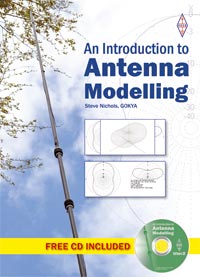
Using MMANA-GAL for antenna modelling


I gave a talk on antenna modelling using the free MMANA-GAL software at my local Amateur Radio Club. It looks at what MMANA-GAL is, how to use it and then a number of different applications.

Some of these are useful and surprising - like how to optimise a 40m off centre fed dipole (Windom) so that you can get 15m. And how mounting an antenna as an inverted V can seriously change its radation pattern or number of bands available.

It also asks the question is the G5RV really a good multiband antenna? Why was my W3EDP end fed better to the south-east and south west and rotten to the north. And does the DL7PE Microvert radiate off its feeder?

Download the presentation in PDF format with the notes included (8.8Mb).

Note: I have also made available a Zip file with some .maa files including the End fed Half Wave, Rybakov vertical, DL7PE Microvert, 80cm magnetic loop, 65ft Inverted L, EH antenna, 20-15-10m trap dipole, 80m OCFD (Windom) and an experimental W5GI mystery antenna file. Download the MMANA-GAL antenna files.