Showing posts with label Heritage. Show all posts

Sunday, 22 April 2018

International Marconi Day 2018 from Caister Lifeboat

Chris G0DWV on the mic. with Roger G3LDI looking on.
Norfolk Amateur Radio Club managed to contact 116 other radio amateurs in 23 different countries on Saturday 22nd April 2018 when we took part in the annual International Marconi Day (IMD) event to mark the inventor's birthday.

This was the ninth year we've taken part.

Using the call GB0CMS and a mixture of Morse code, telephony (speech) and data (FT8), contacts were made with other radio amateurs across the UK, Europe, and the USA.

Notable contacts were made with other IMD stations in Italy, Ireland, Weston-Super-Mare and Poldhu, Cornwall – home of the Marconi Centre from where the inventor made the first transatlantic transmission in 1901.

We ran the all-day special event station at Caister Lifeboat to commemorate the village's original Marconi Wireless Station, which was established at Caister in 1900. The station was in a house in the High Street known as Pretoria Villa and its original purpose was to communicate with ships in the North Sea and the Cross Sands lightship.

Conditions weren’t brilliant due to a major solar disturbance (effects of a coronal hole), but we were still able to cross the Atlantic on three occasions.

We were picked up in Pennsylvania, US via FT8 at -20dB on the reverse beacon network, but didn't make any transatlantic FT8 QSOs.

The equipment used was 100W maximum from an Icom IC-7400 (20m) and an Icom IC-7300 (80/40/30m). Antennas were a W5GI dipole on 40m and my design of a monoband end-fed half-wave (EFHW) vertical for 20m. The FT8 digital mode was used for the first time to show what can be worked with just 20-25W.

We also used a Flex Maestro to remotely link into Malcolm G3PDH's home station via the internet and worked back to ourselves using his special First Class Operators' Club call for April, G4FOC. The Maestro is very impressive!

Above all, it was great fun and a good social event

Friday, 22 December 2017

Radio Caroline back on Medium Wave

The Orford Ness masts
If you fancy a bit of nostalgia you can now listen to Radio Caroline again on 648kHz AM on the medium wave.

The famous pirate radio station needs little introduction, but is now broadcasting legally using (ironically) the famous Orford Ness antenna system on the Suffolk cost, formerly used to transmit the BBC World Service in English around the clock on 648 kHz from September 1982 until March 2011.

The station was founded in 1964 to play pop music all day at a time where broadcasting was dominated by the BBC and pop was played for an hour a week.

Caroline was one of five stations granted a community radio licence by Ofcom and is now running 1kW, but with a really good antenna mounted right next to the sea.

The station is 59+20dB at my home QTH 10 miles south of Norwich (JO02NN) using a Perseus SDR and a homemade 1m active loop mounted in the loft. It is also easily heard with a portable radio.

Radio enthusiasts around Europe might like to listen for it.

More information:

Orford Ness transmitter:
https://en.wikipedia.org/wiki/Orfordness_transmitting_station

Radio Caroline:
http://www.radiocaroline.co.uk/


-->

Tuesday, 21 November 2017

Christmas present ideas!

As Christmas is coming, I thought I would remind people that there are some great radio-related goodies for sale at CafePress.co.uk and .com.

You can choose from a number of items, including:

  • Three different types of ship's radio room clock, with silent period sectors marked
  • "Remember QRT SP" Merchant Navy Radio Officer merchandise
  • "Keep Calm and Work Some DX" merchandise
  • "Keep Calm and Work Some CW" items
  • Nikola Tesla merchandise, featuring him sitting in his Colorado Springs laboratory in 1899, surrounded by electrical arcs.

You can have the last three slogans added to T-shirts, sweatshirts, mouse mats, calendar, mugs and much more.

Just go to the Radio Room!

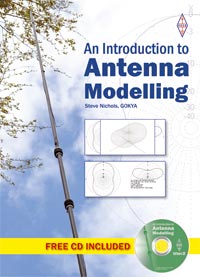
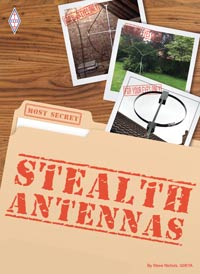
Or there are a number of my radio-related books that make good presents , including "Radio Propagation Explained", "Antenna Modelling", "Stealth Antennas" and "Getting Started in Amateur Radio". Use the image links on the right for more information.

Sunday, 24 September 2017

Visit to NI6BB, USS Iowa, San Pedro, California

The big guns of the USS Iowa.
As many regular readers of this blog may know, I try to visit as many special amateur radio stations as I can when working overseas.

This week I am in Long Beach, California again for a conference and it was an ideal opportunity to visit the famous battleship USS Iowa in nearby San Pedro, which has an amateur radio station with the callsign NI6BB.

USS Iowa (BB-61) is a floating maritime museum that is well worth the visit. It has a rich history that spreads from World War Two, through the Korean conflict in the 50s, and the cold war before it finally became a museum in 2012.

US Navy veteran Jerry Johnson with
one of the 110lb powder sacks.
Its main battery consisted of nine 16 in (406 mm) Mark 7 guns, which could fire 2,700 lb (1,200 kg) armour-piercing shells 23 miles (37 km). On the tour you find out how they used to load the guns with six 110lb silk sacks filled with powder, which when ignited with a single cartridge would rapidly burn in one third of a second, firing the 1,900 lb (862 kg) shell out at 2,690 feet per second (820 m/s).

The USS Iowa discone-cage HF antenna,
complete with plastic owl!
The other statistics are staggering (including 19.7-inch armour plating), but I’ll leave you to Google them.

Anyway, back to the radio, the radio room on the Iowa is well equipped with a Kenwood radio for HF.

On the bow of Iowa is the discone-cage antenna. Fed at the top it is a discone providing coverage from approximately 10 to 30 MHz with a VSWR below 3:1. The antenna has a plastic owl on it to stop pigeons resting - but they ignore it apparently!

Ron Frank N3HI let me operate some 20m SSB from the ship, as I have G0KYA/AB8ZV UK full and US Extra Class licences, and I worked a few stations including Washington State and Ohio. One was a “nearly” as I couldn’t quite get his full call before he faded away, which was a shame. HF conditions weren’t brilliant.

There were one or two loud stations on CW, which they often work, and Ron says they tend to operate a lot of digital too, including FT8.

Anyway, my thanks to Ron for letting me play for an hour and giving me some detailed history of the USS Iowa. If you are ever in the Long Beach/San Pedro area go and visit. It is truly fantastic.

My thanks to Ron Frank, N3HI.
I also revisited W6RO, "The Queen Mary", in Long Beach, California where I am staying. I operated from there in 2012 and they always welcome visiting radio amateurs. We had a long chat about UK and US amateur radio.

If you are interested in some of my other historic radio visits you can read about:
  • NI6IW - USS Midway, San Diego, California
  • W7SUB - the USS Blueback, Portland, Oregon
  • K6KPH - The Maritime Radio Historical Society, Point Reyes/Bolinas, California

Thursday, 6 April 2017

International Marconi Day, April 22 2017


Saturday 22nd April 2017 is International Marconi Day when stations around the world celebrate the birthday of Guglielmo Marconi.

It is also a good opportunity for you to gain a very nice certificate. All you have to do is work 15 award stations and send in a log extract - you don't need QSL cards.

I shall be helping to run GB0CMS again this year at Caister Lifeboat in Norfolk, UK.

There is short video that looks at the equipment the club used to make 165 contacts in 24 countries on Saturday 30 April 2011. And another for the 2012 event when we made more than 500 contacts.

See http://www.youtube.com/watch?v=Z41FLKaT7eY and
http://www.youtube.com/watch?v=C8ZRW0q6SyI

To help UK stations work the requisite number of IMD stations I have prepared some HF propagation predictions. You can view these online.

You can find out more about IMD at: http://gx4crc.com/gb4imd/

Monday, 2 January 2017

Some Christmas QRP HF operating

Elecraft K1 on 40m QRP frequency.
The period from Christmas to the New Year is traditionally the time for the GQRP “ Winter Sports”.

I don't take this too seriously as there are plenty of other calls on my time, but it is an opportunity to get on the air and work a few stations with 5W CW or 10W SSB.

This year got off to a good start with a contact on 23rd December with SK6SAQ at Grimeton in Sweden – home to the Alexanderson alternator that puts out a 200kW signal on 17.2kHz.

SAQ also has a special event callsign so it was good to get operator Kjell in the log using 5W from a Yaesu FT-991 into an outside EFHW. I really must visit Grimeton one day.

I also dragged out my Bencher paddle as I was sending some awful Morse with my Kent single lever I think I was getting key bounce so will have to take a closer look. The Bencher was fine, which was good news.

After Christmas I turned to my Elecraft K1, which I finished in the summer after owning the kit for about 12 years!

This brought CW QSOs with Peter OM0WR in the Slovak Republic on 7.029MHz with 5W into my loft-mounted zig-zag dipole.

The YT160TESLA QSL card.
Then it was YT160TESLA on 20m celebrating 160 years since the birth of Nikola Tesla in Serbia. I really want their QSL card which looks great and worked them on 40m in March. As they went QRT at the end of 2016 it really was a last chance.

I have an Icom IC-7300 on test, which belongs to my local club and that brought 9A1700SBD in Dubrovnik, Croatia, although it took 25W to get through.
The view across the rooftops of Dubrovnic, Croatia.

2016 was the 1700th anniversary of St. Blaise, patron saint of Dubrovnik – if you ever get the chance to go there, do as it is absolutely beautiful.

Station LZ463PP then went in the log with 10W from the IC-7300 and a W5GI dipole on 17m SSB, so still QRP. It was celebrating 463 years of Saint Patapii.

Finally I had a nice (but weak) QSO with Ian EA7JUK in Lubrin, Spain on 20m CW using 5W from the K1 and an indoor dipole. Ian's UK call is G0WHX.

The Reverse Beacon Network proved everything was working!
Sunday 2nd January marks the QRPARCI New Year's Day Sprint, but I really didn't expect to hear anything from the US due to rotten HF conditions. If I do I'll update the blog!

So, I heard a lot more stations than I worked, but I had fun – which is what it is all about.

Tuesday, 2 August 2016

More great tins for QRP radio projects

Click to enlarge
Regular readers will know I've built a couple of QRP HF radios into mint tins. The first was a 20m Rockmite ][ built into a Stewarts' tin with a Spitfire on the front. 

The second was a 40m Foxx-3 built into a Stewarts' train tin.

This all came out of a desire to build something in an Altoids tin or similar having been inspired by the fantastic radios built by Colin M1BUU.

He showed me a Steve Weber-designed ATS (Appalachian Trail Special) in an Altoids tin at a Rishworth QRP convention and the workmanship was fantastic.

Anyway, both my radios work, but at around 1W or less QSOs can be quite hard work – must dig them out again soon and have another play.

But this has set me on the trail for more and better mint tins and I found a couple of crackers recently.

The first depicts the White Star Line and was bought for £3.50 at the Bressingham Steam Museum in Norfolk. They had other designs and it appears to be made by a company called Half Moon Bay in Bath. They are a wholesaler, but do have links to an online stockist – Kitsch-a-go-go – which has lots of different tins.

The second tin was found at the British Motor Heritage Museum at Gaydon and depicts an MGA sports car. It is also a little bigger than an Altoids tin and cost £4.

This was made by a company called Red Hot Lemon. It has a minimum order of £100 unfortunately, but you could always club together with someone else to buy some.

Now, all I need is another kit to build. What I'd really like is a 3W 40m and/or 20m radio transceiver, preferably synthesised so that you move around in frequency that would fit in a standard Altoids tin. So basically, a Steve Weber ATS or MTR – shame they are not being made in kit form. I have a three-band MTR v2 which is my pride and joy.

If you know of any other suitable kits please let me know by commenting below.

Tuesday, 19 July 2016

Operating QRP from Beeston Bump (TG14) in North Norfolk

Update: YouTube video now available

Jim G3YLA and I operated HF and VHF QRP from the top of Beeston Bump in Norfolk as planned today.

It turned out to be the hottest day of the year, so not exactly ideal. Nevertheless, after parking up and walking to the top we were met by a fantastic 360 degree view.

I quickly set up by 40m inverted L end fed half wave (EFHW) on a 10m fishing pole, bungeed to a bench and fed it with my homebrew EFHW matching unit, while Jim tried some CW on 2m from a little beam. He didn't get anywhere with that so switched to FM and had a quick chat with some locals on 145.275MHz.

Once the HF antenna was erected I handed Jim the coax and he set to on 40m CW and quickly worked a station in Germany using 2.5W from his Yaesu FT-817.

Jim G3YLA working Germany on 40m CW.
I meanwhile tried to see what I could work on 2m FM and could raise the GB3FR repeater across the water in Spilsby, Lincolnshire, but there was no one on it. I switched to GB3NB in Norfolk and worked John G8VPE.

I then took over on HF, but 40m was hard work and 20m was not much better. I eventually went back to 40m CW using my 2.5W Steve Weber-designed Mountain Topper Radio (MTR) and raised fellow G-QRP club member Peter G3XJS near Wrotham, Kent who was using 5W to a doublet. I was very pleased to make the contact as that was the first time the MTR has been used in the field.

Looking at the Chilton Digisonde data I think this was via Sporadic E (Es) on 40m as the F2 critical frequency was only about 5MHz - we don't normally associate Es with 40m, but you could see the Es on the plot.

Jim G3YLA then took over again using his FT-817 and had a long CW QSO on 40m with a station in the Netherlands. 

The information board for the Y station.
There were a lot of walkers on the hill and we were able to explain what we were doing - it was quite apt as this was the location for the Beeston Hill Y Station, a secret listening post during World War Two. The chain of Y stations were on the front line, feeding Enigma intercepts to the War Office’s Bletchley Park.

There is an information board all about the Y station and the concrete foundations are still there.

Propagation was iffy at best and the heat was getting to us, so we decided to take the station down and head for the nearest pub for fish and chips and cold refreshments.

My home-made EFHW matcher and SWR
 indicator.
All in a great day and we both agreed we'll go back, perhaps in late September when propagation is better and the temperature is a bit more reasonable.

I also shot some video and I'll try and edit that over the next few days.
My three-band (40, 30 and 20m) Mountain Topper Radio.
3W CW on 40m raised Peter G3XJS in Kent.

Update:

I thought I would do a Reverse Beacon Network (RBN) check tonight.

I was pleasantly surprised to see I was picked up all over the place, including the US, from the top of the bump.

Jim G3YLA wasn't for some reason - not sure why as his CW is waaaay better than mine. Perhaps it was because he responded to CQs and didn't call CQ himself.

Reverse Beacon Network captures from the day -
chuffed I was picked up in the US (just) with 2.5W to an EFHW for 40m (click to enlarge).
Update: YouTube video now available

Saturday, 16 July 2016

G0KYA to operate a "BOTA" station - "Bumps on the Air"

Beeston Hill near Sheringham in North Norfolk.
Image Wikimedia/Stavros1
I plan to operate QRP from Beeston Hill in North Norfolk on Tuesday 19th July as part of a new "BOTA" activation.

BOTA stands for "Bumps on the Air" a wholly-fictitious new organisation for radio amateurs who don't have access to real summits and mountains.

Beeston Hill (known locally as 'Beeston Bump') is not the highest point in Norfolk, but at 63m (207ft) above mean sea level it offers a good view of the coast and excellent HF take off.

I wanted to have some outdoor local QRP SOTA fun, but Norfolk is a little short of suitable summits (well, none actually) and Beeston Bump will have to do.

The highest point in Norfolk is nearby Beacon Hill at 103m (338ft), but I don't want to overstretch myself! Anyway, the view is better at Beeston and there are more ice cream shops nearby.

I've been meaning to do this for years!

Beeston Hill Y station circa 1940.
Image; Wikipedia.
I plan to operate 40m and 20m QRP CW using one or more of a variety of commercial and kit-built radios, including a Yaesu FT-817, Elecraft K1, Mountain Topper Radio (MTR) by Steve Weber KD1JV and a 1W Rockmite. Antennas will be end-fed half wave (EFHW) dipoles.

Beeston Bump is no stranger to Morse code. Beeston Hill Y Station was a secret listening post located on the summit during World War Two. The chain of Y stations were on the front line, feeding Enigma intercepts to the War Office’s Bletchley Park.

There are no awards for working me on Beeston Bump, no certificates and no special QSL cards - just my normal one. And just the fun of working CW at about 16-20 wpm around the usual QRP watering holes on 20 and 40m. I hope to be there from about 10:30am.

Jim G3YLA, a fellow QRP enthusiast, might be with me too.

(With apologies to the excellent Summits on the Air (SOTA) organisation!)

Sunday, 27 September 2015

Amateur radio from a submarine - W7SUB

USS Blueback, W7SUB, Portland, Oregon
I'm lucky enough to do some business travelling every autumn (fall) and am currently in Portland, Oregon, USA.

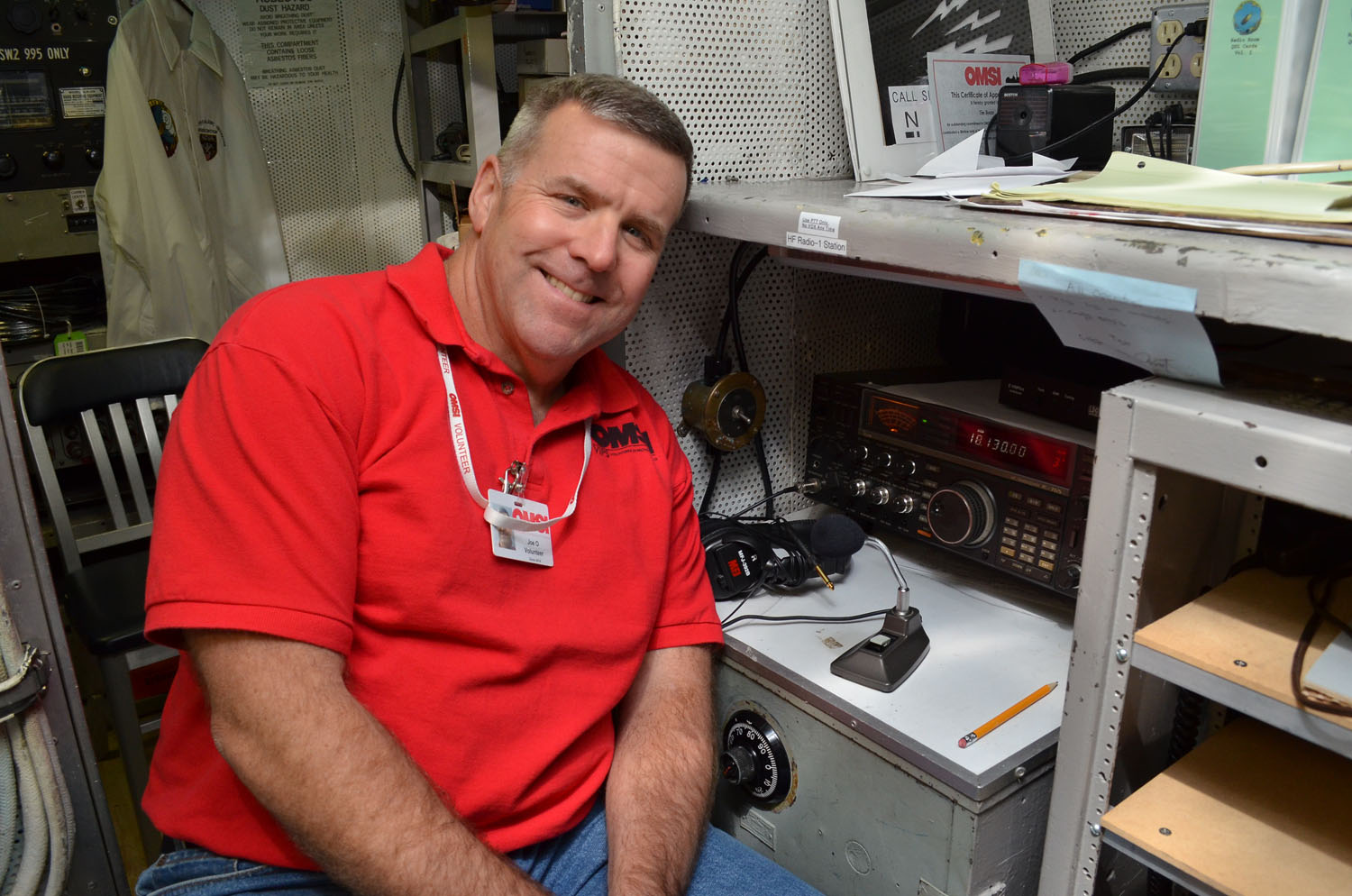
I was even more lucky to do some operating from the submarine USS Blueback at the Oregon Museum of Science and Industry (OMSI) this morning, thanks to Joe KF7UOQ.

We operated SSB and CW on 17m, 20m and 40m and I managed to work a few stations, including as far afield as Wisconsin (17m CW) and a SOTA station Todd W7TAO using 5-10W CW on 40m - conditions were not brilliant.

We organised a sked with Dean KG7MZ in Washington State via 2m (after a fire alarm went off!) and worked him on 40m CW too. I thought the fire alarm was part of the sub's sound effects and stayed put - duh!

I used QRP to stop interference to Joe on 20m. Joe worked Texas and a host of others on 14MHz SSB.

My CW was a little jerky at first until I got used to the sub's straight key - W5NNS must have wondered what he was working!

Antennas are a vertical for 20m and a dipole for 6-50MHz (from memory). W7SUB is obviously at river level and surrounded by buildings so not the best location for HF.

Joe KF7UOQ
USS Blueback (SS-581) is a Barbel-class submarine formerly in the United States Navy. I was amazed to see it actually has three decks and was nowhere near as claustrophobic as I thought it would be. Having said that, not sure I'd want to be underwater on active service on it!

USS Blueback appeared in the 1990 movie "The Hunt for Red October".

On previous trips to the "left coast" I've been lucky enough to operate on the Queen Mary, USS Midway and at K6KPH at Point Reyes/Bolinas north of California.

The USS Blueback Radio Room
Very nice to be able to include amateur radio on a business trip. Thanks again to the team at W7SUB (what a callsign!) including Joseph Noecker K7FGN who helped organise it.

You can click on the images to see a bigger version.

Steve G0KYA/AB8ZV

Friday, 11 September 2015

SSTV images found from Space Shuttle Challenger, 1985


I had a really big surprise this week. My local club - Norfolk Amateur Radio Club - were having a retro technology evening. This involves people bringing in equipment like Sinclair Spectrums, BBC Bs, old calculators etc - even an Oric Atmos showed up this year.

The highlight for me was a 1982 Betamax video recoder and Sony UHF telly, complete with videos of the news and BBC's "Multi-Coloured Swap Shop" with Noel Edmonds, thanks to Robert G4TUK.

Anyway, I took my Sony Walkman Professional, a couple of old Macintosh computers and a 1978 Russian Vega Selena shortwave radio - still working. While I was looking for the Walkman I found an old box of cassettes with one marked "Space Shuttle August 1985".

This turned out to have 2m SSTV signals on it from Tony England W0ORE's STS-51-F mission.

The recording was a bit noisy as I think I used a Slim Jim, and in those days I used a Sinclair Spectrum to decode the images. But what could I do with it in 2015 - 30 years later.

I researched this and he used a Robot 1200C to encode the SSTV images. I was able to use RX-SSTV to decode some of the black and white 8-second images and the Robot 36 ones. They won't win any awards but you can definitely see what they are - one is Tony himself and the others are of the Shuttle's cargo bay, with the telescope it was carrying, and the earth.

The most chilling thing is the Morse ident in between the images which reads "W0ORE/CHALLENGER".

Less than a year later, in January 1986, Challenger was no more after exploding shortly after launch.


Monday, 22 September 2014

NI6IW, USS Midway, San Diego

I was lucky enough to visit the USS Midway aircraft carrier in San Diego, California, last week while on a work trip.

It is now a floating museum, dedicated to telling the story of how an aircraft carrier functioned, with a lot of the stories told by ex-Navy personnel who served on it.

I was even more lucky because Hal KI2HAL gave me a behind the scenes tour of the ship's amateur radio station NI6IW.

It has three Elecraft K3s that allow it to work all bands. Because of the museum's rules, all the antennas have to be the original authentic models fitted to the ship when it was in service. This means that the ham station uses a couple of navy verticals and a sloping three-wire set-up.

Hal KI2HAL
I was able to tune one of the verticals for 17m to see if I could work the UK – a distance of more than 5,000 miles. I didn't make contact, although I think I did hear G3SGE on CW working a CT station. I've not been able to track down who G3SGE is though.

The ship also has an Icom D-star set-up and makes a lot of contacts that way.

The ship is active on the Museum Ships weekend "on the air" days so you might be lucky to hear it.

The antennas
In all, the ship is fascinating – you can hear from a retired Navy pilot exactly how you land and take off on an aircraft carrier. Hairy stuff.

My thanks to Hal for showing me around. Just click on an image above to see a bigger one.

Sunday, 29 December 2013

Christmas Eve 2013 LF broadcast from SAQ, Grimeton, Sweden

The SAQ 17.2kHz transmitter at Grimeton, Sweden
I remembered to record the Christmas Eve Morse broadcast from the world heritage radio station SAQ at Grimeton, Sweden this year. It was broadcast on 17.2kHz using an Alexanderson alternator and about 100kW.

Last tranmission I forgot to turn my Wellbrook ALA1530S loop to point North East, so it was in the null and I received nothing - doh! I used a Perseus SDR and the loop, which worked well and all was copied.

The SDR broke the recording into two files and knocked off the "C" in "Merry Christmas", but I have put it back in using Audacity sound editing software.

If you don't read CW the message was:

-------------------------

VVV DE SAQ SAQ SAQ.

100KW ALTERNATOR ON 17.2KHZ.

WE AGAIN WISH YOU ALL A MERRY CHRISTMAS AND A HAPPY NEW YEAR. SIGNED: THE WORLD HERITAGE AT GRIMETON AND THE ALEXANDER-GRIMETON VETERANRADIOS VAENNER ASSOCIATION.

FOR QSL INFO PLEASE READ OUR WEBSITE: WWW.ALEXANDER.N.SE.
DE SAQ SAQ SAQ SK.

---------------------

Tuesday, 29 January 2013

Origins of the term "CQ"

Have you ever wondered where some of our radio terms come from?

Some say that SOS stands for "Save our Souls" - which it doesn't. The Morse phrase ... --- ... was chosen as it was very distinctive and unlikely to be misread. It doesn't stand for anything.

So what about CQ? I've heard it described as "Come Quick" but that doesn't make sense.

But a chance conversation with someone while working in the US has cleared this up. He is multi-lingual (unlike me) and although he is not a radio ham, knew immediately what it could stand for.

CQ is Cherche Quelqu'un - literally the French for “looking for someone”

This makes sense as a lot of radio terms have French origins - the Coastguard still says "securite" for important information.

So there you have it - the origins of CQ. Or is it?

Pol G3HAL sent me an update. According to Wikipedia:
Land telegraphs had traditionally used "CQ" ("sécu," from the French word sécurité[1]) to identify alert or precautionary messages of interest to all stations along a telegraph line, and CQ had also been adopted as a "general call" for maritime radio use. However, in landline usage there was no general emergency signal, so the Marconi company added a "D" ("distress") to CQ in order to create its distress call. Thus, "CQD" is understood by wireless operators to mean, "All stations: distress." Contrary to popular belief, CQD does not stand for "Come Quick, Danger", "Come Quickly: Distress", or "Come Quick — Drowning!"; these are backronyms.

This sounds more likely.

Monday, 7 January 2013

Keep Calm And Work Some CW

I had a tremendous response to the "Keep Calm And Work Some DX" T-shirts I designed for Cafepress.

These joined the Marine Radio Room clock, which has sold well around the world. For a bit of fun I have now added a "Keep Calm And Work Some CW" shirts and mugs too.

You can find them at  "The Radio Room" on Cafepress

Monday, 29 October 2012

Video of trip to K6KPH, California

I was lucky enough to visit the Maritime Radio Historical Society's old KPH sites at Bolinas and Point Reyes, California, in September.

If you haven't heard of these they were the transmitter and receiver sites for KPH - the mighty Pacific coastal station that sent Morse code and RTTY to ships and point-to-point services until the late 1990s.

Both sites are now restored and they also run K6KPH - an amateur station. They were kind enough to let me operate some CW as well, letting me make contacts across the USA on 14MHz.

You can find out more at: www.radiomarine.org

I shot a seven-minute video while I was there too - you can see us working G3LDI back in the UK on 20m CW. Go to https://www.youtube.com/watch?v=Wj-IwYPrtTM


Monday, 23 April 2012

GB0CMS makes nearly 500 contacts in 40 countries.

NARC member and local TV weatherman Jim Bacon, G3YLA,
operating the Caister station GB0CMS. (Steve Nichols G0KYA)
I was part of the team that operated GB0CMS in Caister (Norfolk) on Saturday as part of International Marconi Day. We had two stations - one on 40m and the other on 20m, operating both CW and SSB.

It turned out to be our best ever effort - we worked 487 hams in 40 countries and got as far afield as Austraila (VK5), Barbados (8P), the US (out to Ohio), Canada and Asiatic Russia (UA9).

The reason I'm telling you this is because we tried a new antenna for 40m - the W5GI "Mystery Antenna".  In fact, I only finished making it a day or so before the event so it was largely untested.

I've used one of these at home for a while and it works very well on 80m and 40m, especially if you can't fit an 80m dipole in. You can find out more on my W5GI post above, but everyone who used it was impressed and we got some very favourable reports. I find at home that it often breaks pileups on 40m even though it rests on the apex of the roof tiles!

On 20m we used my vertical end fed half wave (EFHW) design, but with a few tweaks. To stop RFI, which has plagued us in previous years, we mounted both antennas further away and I added four 10ft ground radials, earthed the matching unit to the screw-in base mount and also put a choke (line isolator) about 20ft back from the antenna. The radials are not as crucial as with a quarter wave design as it is a high impedance feed point. However, a few won't hurt and neither will the earth. The choke stopped currents flowing on the braid back to the radio. If I am operating just one radio this isn't quite so necessary.

It did the trick and we were able to operate the two stations with no mutual interference and no lost keyers or interfaces when RF gets into the cabling.

If you worked us on Saturday take a look at this short video shot by Kevin M0UJD.

Thursday, 5 April 2012

Titanic 100th anniversary book - now available as an ebook too

The book "The loss of the Titanic - its story and lessons", which I helped republish, is also now available as an ebook as well as a paperback - just ready for the 100th anniversary!
Lawrence Beesley was a science teacher, journalist and author who was a survivor of the Titanic tragedy in 1912. In this dramatic real-life tale Beesley tells first hand what it was like to be on the Titanic as it plunged into the icy waters of the North Atlantic on that fateful night.
As well as describing the voyage, the collision with the iceberg and the subsequent sinking, Beesley documents what could have been done to save the 1,500 plus people who perished.
Cover of Titanic bookHis account, and others, resulted in many changes to maritime law and procedure in an effort to make sure that a disaster of Titanic’s proportions should never happen again. “The loss of the S.S. Titanic – its story and its lessons” was first published in 1912, shortly after the disaster.
Now republished by InfoTech Communications, ahead of the 100th anniversary of the accident, the 116-page paperback book is available via Lulu.com, delivered straight to your door wherever you live in the world.
Find out more

Thursday, 3 November 2011

Titanic 100th anniversary next year - new book available

Here's a good stocking filler.

Lawrence Beesley was a science teacher, journalist and author who was a survivor of the Titanic tragedy in 1912. In this dramatic real-life tale Beesley tells first hand what it was like to be on the Titanic as it plunged into the icy waters of the North Atlantic on that fateful night.

As well as describing the voyage, the collision with the iceberg and the subsequent sinking, Beesley documents what could have been done to save the 1,500 plus people who perished.

Cover of Titanic bookHis account, and others, resulted in many changes to maritime law and procedure in an effort to make sure that a disaster of Titanic’s proportions should never happen again. “The loss of the S.S. Titanic – its story and its lessons” was first published in 1912, shortly after the disaster.

Now republished by InfoTech Communications, ahead of the 100th anniversary of the accident, the 116-page paperback book is available via Lulu.com, delivered straight to your door wherever you live in the world.

Find out more

Tuesday, 13 September 2011

New "CW only" ship's radio room clock

For some time I have had a reproduction ship's radio room clock (and other items) for sale on Cafepress.com. You can read the full story about them here. I have had a few enquiries from die-hard former ship's radio operators asking if they could have a "CW only" version. These only had the red sectors at 15 mins and 45 min mins past the hour, when you had to go QRT and listen to 500kHz for emergency calls. Well, I've now reworked the artwork and you can order the "500kHz" clock at "The Radio Room" on cafepress.com.